Tennis Serve Video Analysis: Two Views for Toss and Contact
Film a tennis serve from the side and behind the baseline. Keep the toss in frame and compare the release, contact interval and recovery across similar serves.
Read the filming planA dink is a soft shot played after a bounce near the non-volley zone. On video, a small change can disappear if the frame ends at the paddle. Keep the rally context long enough to see both what the player received and what the shot created.
Include the incoming bounce, paddle contact, net crossing, next bounce and the player's recovery. Start with a fixed side-oblique view outside the court, then compare similar feeds. A feet-only or paddle-only close-up loses the ball outcome that gives the movement context.
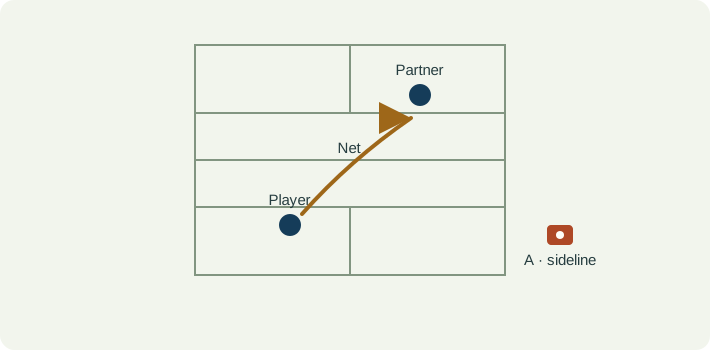
Use a stable side-oblique view with the player's feet, paddle, net and relevant landing space visible. Check the partner is not blocking the contact area. Keep phones and supports out of the court and surrounding movement space.
If the paddle is too small in the wide clip, record a separate closer set. Retain the incoming bounce, feet and first ball travel; a crop of the paddle face alone cannot explain the whole exchange.
Label straight or cross-court, forehand or backhand, and cooperative or competitive practice. A low comfortable feed and a stretched defensive contact are different situations.
| Event | What to keep visible | Review question |
|---|---|---|
| Incoming bounce | Where and how the incoming ball appears relative to the player. | Are you comparing similar feeds, or a comfortable ball with a difficult one? |
| Paddle contact interval | The visible approach to the ball and its first separation from the paddle. | Is contact clear enough to compare, or hidden by a partner or net? |
| Net and next bounce | The visible crossing and landing area on the other side. | Did the ball reach the intended space under similar conditions? |
| Recovery | The player's next ready position within the same rally. | Did the clip continue long enough to see the next exchange? |
| Observation | Interpretation to check | Next useful action |
|---|---|---|
| The net hides the ball at contact | The camera cannot resolve the relevant interval. | Change the side-oblique position for the next recorded set. |
| The paddle looks more open in one clip | Perspective and camera height may differ. | Compare a matched view before assigning meaning to a face angle. |
| One dink travels higher | The feed, contact situation or target might also be different. | Revisit the incoming bounce and label the target. |
| A partner crosses the ball path | Automatic tracking may attach to another moving object. | Check the actual ball frames and use a shorter, clearer segment. |
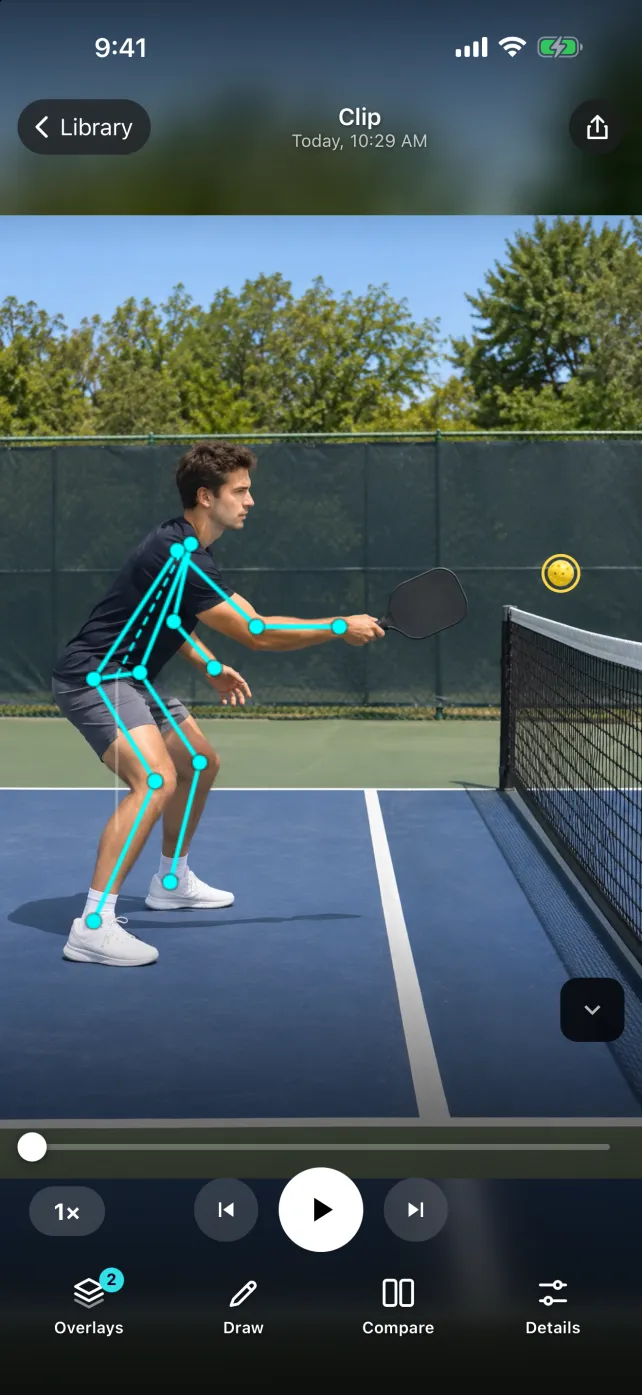
In SportsDraw 1.1.0, step through the incoming bounce and paddle contact, then compare a matched segment from another rally. A circle around the intended landing region can keep the question clear. Check any ball trail at the net, paddle and partner crossings before using it in a shared clip.
Pickleball video analysis in SportsDraw · See what SportsDraw can do · See SportsDraw on the App Store
USA Pickleball's basic-terms resource defines the dink and explains its intended soft, controlled trajectory into the opposing non-volley zone. Our filming workflow does not turn a single camera into line-calling or rules-officiating equipment. It cannot certify a fault or compute a three-dimensional paddle-face angle from an obstructed view.
Slower playback does not add frames that the camera never recorded. If contact is hidden or falls between frames, preserve that uncertainty in your note. See frame timing explained.
https://sportsdraw.app/posts/pickleball-dink-video-analysis
This worksheet stays in this page. Copy or print it to keep it; its contents are not sent to us.
Cross-court forehand · cooperative feed · incoming bounce visible · net hides contact in rep 6 · adjust camera before comparing paddle position.
This article is published by the app developer as a filming-and-review workflow. Camera diagrams and example notes are illustrative. They are not athlete test results or an individual coaching assessment. Coaching context was checked against the primary resources below on November 8, 2026.
Primary definitions and coaching context. The camera and comparison tables are this guide's original review workflow.
Film a tennis serve from the side and behind the baseline. Keep the toss in frame and compare the release, contact interval and recovery across similar serves.
Read the filming planReview basketball shooting form with fixed side and rear-oblique camera views. Compare a matched gather, release interval and landing without inventing an ideal angle.
Read the filming planAll sports video-review guides · Baseball and other practice articles