Volleyball Serve Video Review: See the Toss, Contact and Target
Film a volleyball serve with full-body framing and target context. Compare the same serve type, toss, contact interval and recovery on ordinary phone video.
Read the filming planA made basket is an outcome, not a complete explanation of the shot. The useful clip starts before the gather and lasts through the landing. This workflow helps you separate what is visible in a rep from what you might be guessing about it.
Keep the shooter, ball at release, both feet and basket context in a fixed frame. Use a side view for movement and timing, then a separate rear-oblique view for alignment. Compare the same shot location and preparation, and retain both makes and misses.
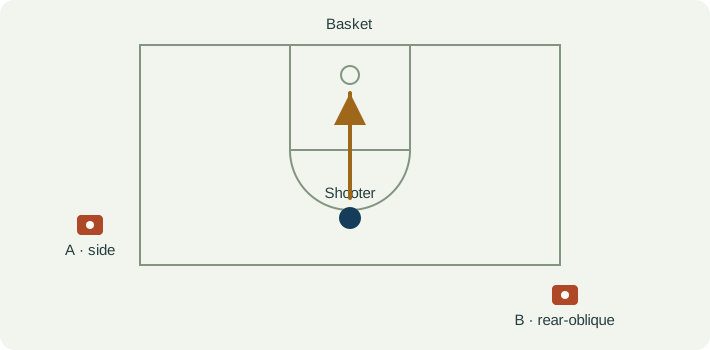
Put the phone outside the playing and rebounding area. Frame the player's entire body from the gather through the landing, with room for the ball above the head. Include the basket if it fits without making the shooter too small.
Use a separate set from behind and to one side of the shooter. Keep a court line and the basket visible for context. This can help compare the player's position against the same reference, but it is not a true three-dimensional alignment measurement.
Label the location, catch-and-shoot or off-dribble preparation, and whether a defender was present. A free throw, stationary form shot and moving jump shot deserve separate comparisons.
| Event | What to keep visible | Review question |
|---|---|---|
| Gather | The ball arriving in the shooting motion and both feet before the rise. | Did the rep begin from a similar catch or dribble? |
| Rise | The visible sequence of body and ball movement before release. | What changed in the sequence, without assigning a cause from one frame? |
| Release interval | The last visible hand-ball overlap and the first separate ball frame. | Can you compare that same interval in both clips? |
| Landing and outcome | Both feet after the shot, followed by the recorded make or miss. | Did the player remain in frame long enough to see the finish? |
| Observation | Interpretation to check | Next useful action |
|---|---|---|
| The ball is cut off at release | The most relevant interval is missing. | Widen or raise the frame before recording another set. |
| The basket is visible but the shooter is tiny | Outcome footage has replaced a usable form view. | Move the side camera closer while keeping the full player and release visible. |
| A line looks different on two clips | Camera height, distance or shot location may have changed. | Match the references before interpreting the drawing. |
| A skeleton elbow jumps to the wrong arm | The pose estimate is obscured or mistaken. | Use the original image and manual marks for that frame. |
In SportsDraw 1.1.0, compare matched clips at release, draw one reference around the feet or ball position, and step backward to the gather. Body tracking can make a joint easier to locate, but verify each marker. If you turn on ball tracking, keep enough contrast and headroom for the ball to remain visible.
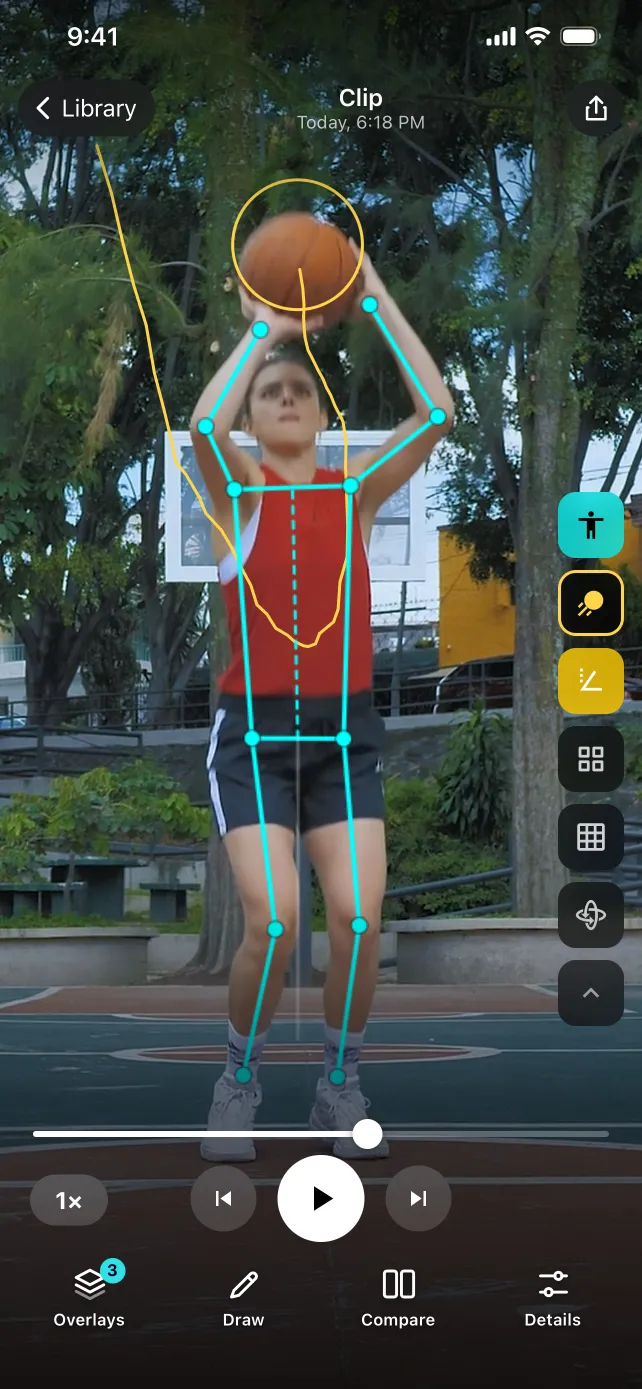
Basketball shooting form in SportsDraw · See what SportsDraw can do · See SportsDraw on the App Store
A single view does not establish a universal elbow angle, true release angle or a measured ball arc. Make/miss results from a small set cannot identify a technical cause by themselves. Use the video alongside a coach's observations, the practice context and additional reps, rather than treating an overlay as an automatic form grade.
Slower playback does not add frames that the camera never recorded. If contact is hidden or falls between frames, preserve that uncertainty in your note. See frame timing explained.
https://sportsdraw.app/posts/basketball-shooting-form-video-analysis
This worksheet stays in this page. Copy or print it to keep it; its contents are not sent to us.
Right wing · catch-and-shoot · side view · rep 2 make / rep 3 miss · both releases visible · compare the gather before changing a cue.
This article is published by the app developer as a filming-and-review workflow. Camera diagrams and example notes are illustrative. They are not athlete test results or an individual coaching assessment. Coaching context was checked against the primary resources below on November 8, 2026.
Primary coaching context for form shooting. This guide contributes the recording, matched-rep review and observation record rather than replacing the practice plan.
Film a volleyball serve with full-body framing and target context. Compare the same serve type, toss, contact interval and recovery on ordinary phone video.
Read the filming planFilm a tennis serve from the side and behind the baseline. Keep the toss in frame and compare the release, contact interval and recovery across similar serves.
Read the filming planAll sports video-review guides · Baseball and other practice articles