Hockey Wrist-Shot Video Review: Keep the Blade, Puck and Finish
A rink-aware camera plan for hockey wrist-shot review. Retain the stick blade, visible puck and player’s finish, with a printable note for coach discussion.
Read the filming planA lacrosse ball can remain hidden in the pocket until it is too small to resolve clearly. A useful recording still preserves the approach, stick-head movement and finish around that interval. Start with one familiar overhand-shot practice rather than mixing unrelated highlights.
Keep the player’s approach, both feet, the entire stick and the early release area visible from an approved position outside the shot lane. Record the feed, hand, shot type and target. Compare matched attempts before interpreting a change in the visible sequence.
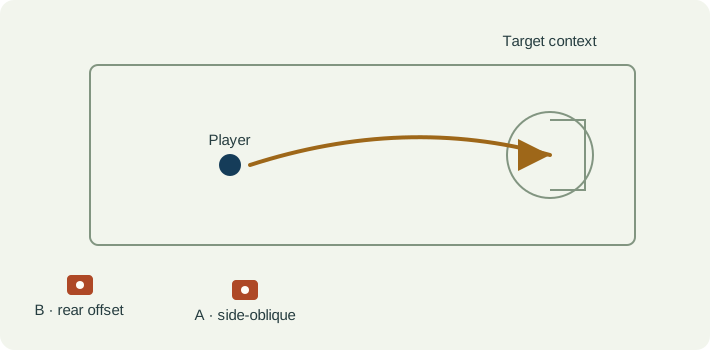
Use a fixed view that retains both feet and the highest and widest part of the stick movement. Place the support outside the active shooting area and follow the coach’s setup. An upper-body portrait can hide both the approach and the stick head near release.
A side-oblique view can retain the visible shooting sequence. A separate rear-offset set may show the intended target more clearly. Neither camera belongs behind or beside a goal where an attempt could strike the recorder. Keep the two sets labelled as different attempts.
Label overhand versus another shot type, dominant or non-dominant hand, feed and target. Match stationary attempts with stationary attempts, and approaches with comparable approaches. Different equipment or a different practice setup belongs in the note.
| Event | What to keep visible | Review question |
|---|---|---|
| Approach | The starting position, final approach and both feet. | Are the feed, hand and shot task comparable? |
| Stick-head sequence | The whole stick before and through the selected interval. | Does the head stay visible or disappear outside the crop? |
| Release interval | The last identifiable pocket area and first clear separated ball, if recorded. | Is the release actually visible, or only inferred from the next frame? |
| Finish | The follow-through and next step. | Does the clip retain enough context to explain the observation? |
| Observation | Interpretation to check | Next useful action |
|---|---|---|
| The ball is hidden in the pocket. | The exact release time may not be visible. | Use a release interval and avoid reporting an exact instant. |
| One clip uses the other hand. | Hand and camera perspective change the comparison. | Label the sides and keep the intended comparison explicit. |
| The target is visible but the stick head is cropped. | The view retained outcome context and lost stroke detail. | Use a separate wider or differently positioned approved recording. |
| A trail follows a background object. | A small ball, occlusion or background may confuse tracking. | Check the original frame and leave unreliable output out of the coaching note. |
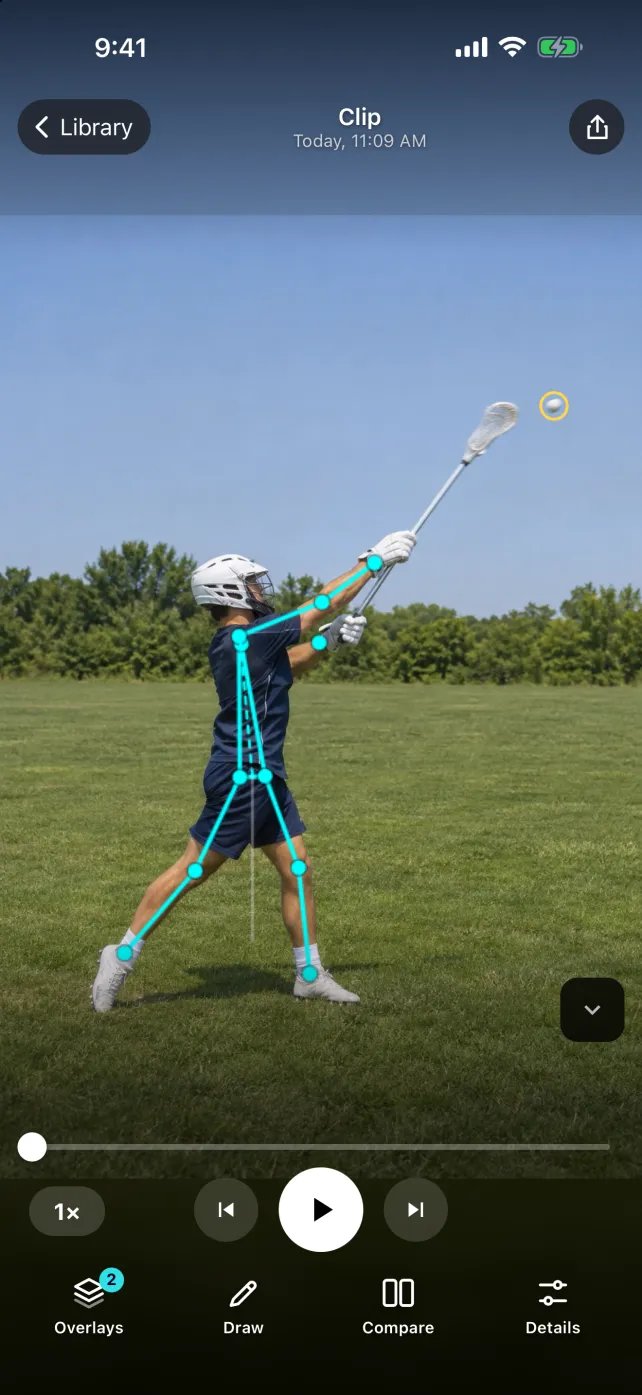
In the SportsDraw player, inspect a visible shooting sequence with slow playback, frame stepping and manual annotations, then compare matched attempts and save the setup in a note. SportsDraw includes automatic ball tracking, but this article does not validate it for a small fast lacrosse ball or promise a complete release-to-goal trail.
See what SportsDraw can do · See SportsDraw on the App Store
Video review does not establish ball speed, pocket mechanics, forces or three-dimensional joint motion from a single uncalibrated view. A visible trail must be checked against the original clip. This guide does not prescribe shooting mechanics, increase workload or replace the coach’s practice and field-safety decisions.
Slower playback does not add frames that the camera never recorded. If contact is hidden or falls between frames, preserve that uncertainty in your note. See frame timing explained.
https://sportsdraw.app/posts/lacrosse-shooting-video-analysis
This worksheet stays in this page. Copy or print it to keep it; its contents are not sent to us.
Overhand shot, same hand and feed, fixed side-oblique view. Both clips show the approach and finish, but the ball is hidden near release in take B. Observation: the stick-head sequence is visible; exact release timing is unknown. Ask the coach whether another permitted view would answer the question.
This article is published by the app developer as a filming-and-review workflow. Camera diagrams and example notes are illustrative. They are not athlete test results or an individual coaching assessment. Coaching context was checked against the primary resources below on November 8, 2026.
The governing body’s primary resource includes an overhand-shooting demonstration and distinguishes shooting from other stick skills. This camera plan is an original recording workflow, not a reproduction of its instruction.
Historical context for its coach-development and teaching-basics resources. Old clinic dates and app announcements are not presented as current offers.
A rink-aware camera plan for hockey wrist-shot review. Retain the stick blade, visible puck and player’s finish, with a printable note for coach discussion.
Read the filming planFilm a soccer shot with the kicking foot, ball and goal visible. Review approach, contact and the early ball path using a repeatable phone-video checklist.
Read the filming planAll sports video-review guides · Baseball and other practice articles