Soccer Dribbling Video Review: See Touches and Changes of Direction
Set up a side-on dribbling clip, keep the full cone lane visible, and compare the touch before a turn, the change of direction and the exit.
Read the filming planA tight catch clip can miss how the receiver reached the ball. For route review, the useful recording starts at the stance and follows the whole non-contact route within one fixed frame. This guide focuses on ordinary skills practice, not tackling or contact technique.
Use a fixed wide sideline view showing the start, stem, break and several exit steps. Label the route and intended break point. Align two comparable clips at the same visible event near the break, then inspect the approach and exit rather than judging a single foot position.
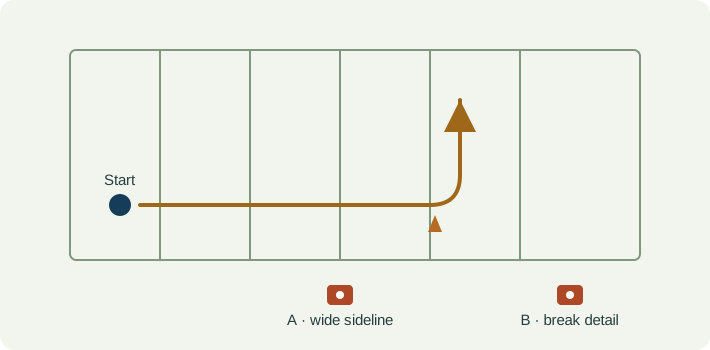
Record from outside the running and throwing lanes. Include the receiver's full body, the intended break reference and enough space for the exit. Put a stationary field line or practice cone in the image so the location is repeatable.
For a separate set, move closer while retaining the final part of the stem and several steps after the change of direction. Do not crop the player's head or feet to make an overlay appear larger.
Label the route, side, starting stance, intended depth and whether a ball or defender is involved. An unopposed route and a pressured rep are not interchangeable comparisons.
| Event | What to keep visible | Review question |
|---|---|---|
| Start | The first visible movement from the chosen stance. | Were the reps started under the same cue and route task? |
| Stem | The approach to the break relative to a field reference. | Did the receiver reach a similar place before changing direction? |
| Break sequence | The visible steps around the direction change with the feet and torso in frame. | What changed across the sequence, rather than in one isolated pose? |
| Exit and catch context | Several steps after the break and the ball arrival if included. | Did the route continue through the intended space and remain visible? |
| Observation | Interpretation to check | Next useful action |
|---|---|---|
| Only the catch is in frame | The stem and break cannot be reviewed. | Start the clip earlier and widen the fixed view. |
| A skeleton misses the outside leg | The pose estimate is uncertain or occluded. | Check the original frames; use a simple manual reference instead. |
| The route looks sharper in a closer camera view | Lens perspective and framing changed. | Compare the same sideline position or record a fresh matched set. |
| The throw changes the receiver's last steps | The catch situation differs from the intended route task. | Label the throw and review the break before the ball adjustment. |
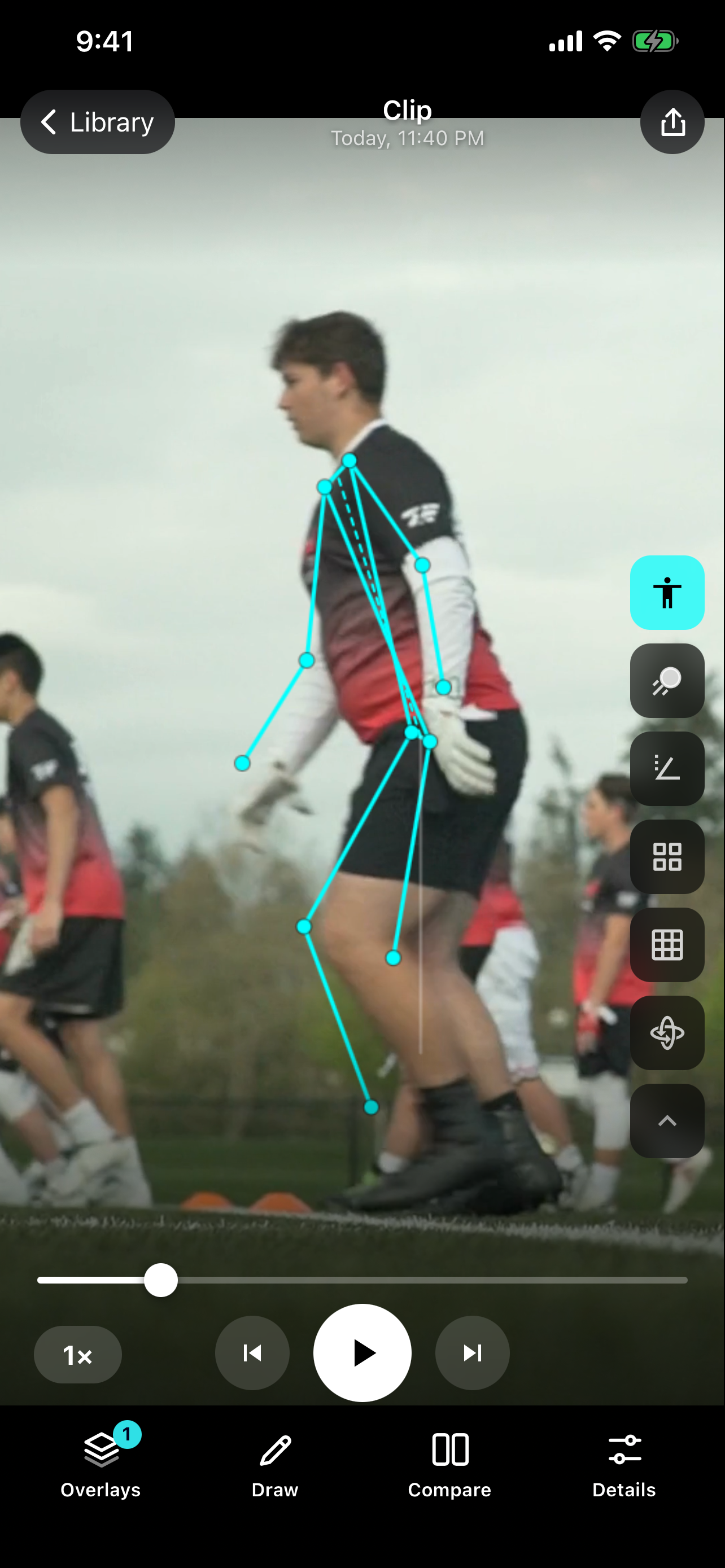
In SportsDraw 1.1.0, review the full-body view with body tracking, checking the feet against the video at the break. Draw a field reference or mark one visible step, then compare matched route clips. A useful export includes enough of the stem and exit to make the marked frame understandable.
See what SportsDraw can do · See SportsDraw on the App Store
A sideline recording does not provide an official timing-gate result, certified route depth or a complete explanation of separation against a defender. A body skeleton is an image estimate, not a coaching grade. Keep cone-only, ball-involved and defended routes as distinct contexts when deciding what to practise next.
Slower playback does not add frames that the camera never recorded. If contact is hidden or falls between frames, preserve that uncertainty in your note. See frame timing explained.
https://sportsdraw.app/posts/football-route-running-video-analysis
This worksheet stays in this page. Copy or print it to keep it; its contents are not sent to us.
Right-side out route · non-contact · same depth reference · full sideline view · align at break marker crossing · compare exit sequence.
This article is published by the app developer as a filming-and-review workflow. Camera diagrams and example notes are illustrative. They are not athlete test results or an individual coaching assessment. Coaching context was checked against the primary resources below on November 8, 2026.
A primary coaching example of route-break practice. This guide supplies a separate camera and review protocol; it is not an official USA Football evaluation.
Set up a side-on dribbling clip, keep the full cone lane visible, and compare the touch before a turn, the change of direction and the exit.
Read the filming planReview basketball shooting form with fixed side and rear-oblique camera views. Compare a matched gather, release interval and landing without inventing an ideal angle.
Read the filming planAll sports video-review guides · Baseball and other practice articles