Tennis Serve Video Analysis: Two Views for Toss and Contact
Film a tennis serve from the side and behind the baseline. Keep the toss in frame and compare the release, contact interval and recovery across similar serves.
Read the filming planThe shuttle can be visible in a wide court recording while the racket contact remains too small to inspect. Conversely, a tight upper-body crop can lose the approach and recovery. Decide whether you want to review one overhead clear or the context of a rally before choosing a view.
Use a permitted side-oblique position outside the working court, with room for the player’s feet, full racket reach and recovery. Keep a clear and a smash as separate tasks. A whole-court rear view provides rally context but may not resolve a small contact event.
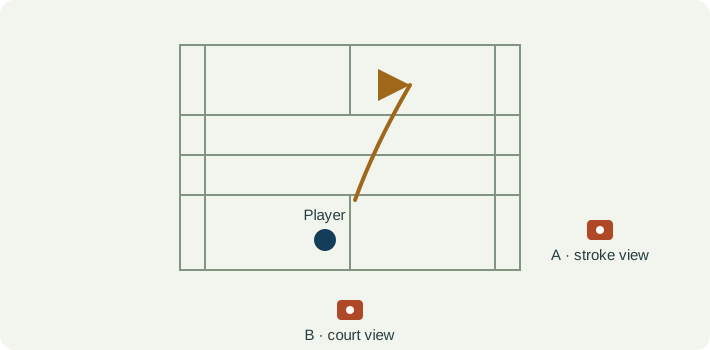
Ask the coach for a filming spot outside both the player’s movement space and neighbouring courts. Test the frame with the full racket reach, feet and recovery included. Leave headroom beyond the racket; framing only the head and shoulders can remove the event you meant to inspect.
Use a side-oblique set for a visible preparation and overhead sequence. A separate rear-court set may retain feed, court position and shuttle destination. These are different questions. Do not treat separate attempts from two views as simultaneous recordings of one stroke.
Label the shot, feed, intended target, racket side and starting court area. A high feed, a rushed return and an overhead clear under pressure are not interchangeable. Use stable framing and check that lighting preserves enough detail around the racket head.
| Event | What to keep visible | Review question |
|---|---|---|
| Preparation | The player, feet and racket before the overhead sequence. | Do both clips begin from a similar feed and court position? |
| Overhead interval | The full racket reach and the shuttle when visible. | Can I see separation, or is the contact hidden or between frames? |
| Follow-through | The racket and body after the selected interval. | Does the whole sequence remain inside the frame? |
| Recovery | The next movement and a court reference. | Did I keep enough context to understand the finish of this attempt? |
| Observation | Interpretation to check | Next useful action |
|---|---|---|
| The shuttle is visible but the racket head is not. | The frame may answer a court-position question without resolving the stroke. | Use a separate detail set rather than enlarging a tiny blurred crop. |
| A clear and a smash look different. | The task and intended flight are different. | Compare the same named shot with a similar feed. |
| The overhead contact is a blur. | Exposure, capture rate or occlusion may limit the recording. | Retain the uncertainty and test the next permitted setup in adequate light. |
| Automatic tracking does not follow the shuttle. | A shuttlecock is not a ball, and shuttle tracking is not established for this app. | Use manual review; do not treat a guessed trail as observed flight. |
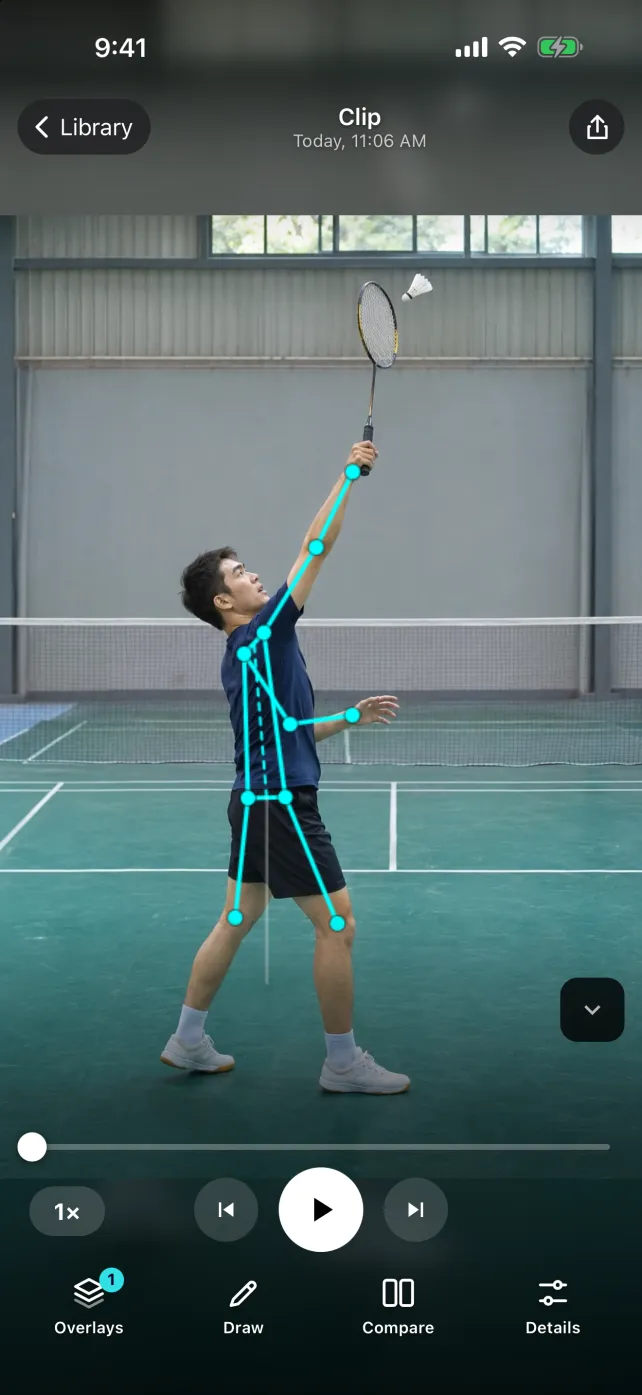
For SportsDraw 1.1.0, use slow playback, frame stepping, manual drawings and clip comparison to discuss a visible overhead sequence. Add the feed and shot name to the note. This is not an automatic badminton stroke classifier, full-rally statistics tool or validated shuttle-tracking workflow. Body overlays may be unreliable when a raised arm and racket overlap.
See what SportsDraw can do · See SportsDraw on the App Store
A small shuttle and fast racket contact can be unresolved even in a slow-motion recording. A two-dimensional angle does not measure the racket face in three dimensions or determine shuttle speed. This guide supplies a filming plan for familiar coached practice, rather than a prescription for overhead mechanics or additional repetitions.
Slower playback does not add frames that the camera never recorded. If contact is hidden or falls between frames, preserve that uncertainty in your note. See frame timing explained.
https://sportsdraw.app/posts/badminton-overhead-clear-video-analysis
This worksheet stays in this page. Copy or print it to keep it; its contents are not sent to us.
Overhead clear, same high feed and starting court area. Both recordings retain the feet and racket, but take B has no sharp shuttle position near the overhead interval. Observation: preparation and recovery are visible; exact contact is unknown. Ask whether a different permitted view would answer the question.
This article is published by the app developer as a filming-and-review workflow. Camera diagrams and example notes are illustrative. They are not athlete test results or an individual coaching assessment. Coaching context was checked against the primary resources below on November 8, 2026.
The primary teaching manual distinguishes the forehand overhead clear and its preparation-to-recovery context. The camera map and review card here are original filming resources, not reproduced manual illustrations.
Film a tennis serve from the side and behind the baseline. Keep the toss in frame and compare the release, contact interval and recovery across similar serves.
Read the filming planFilm a forehand drive with the incoming bounce, racket movement and recovery visible. Compare matched feeds with a free phone-video review checklist.
Read the filming planAll sports video-review guides · Baseball and other practice articles